

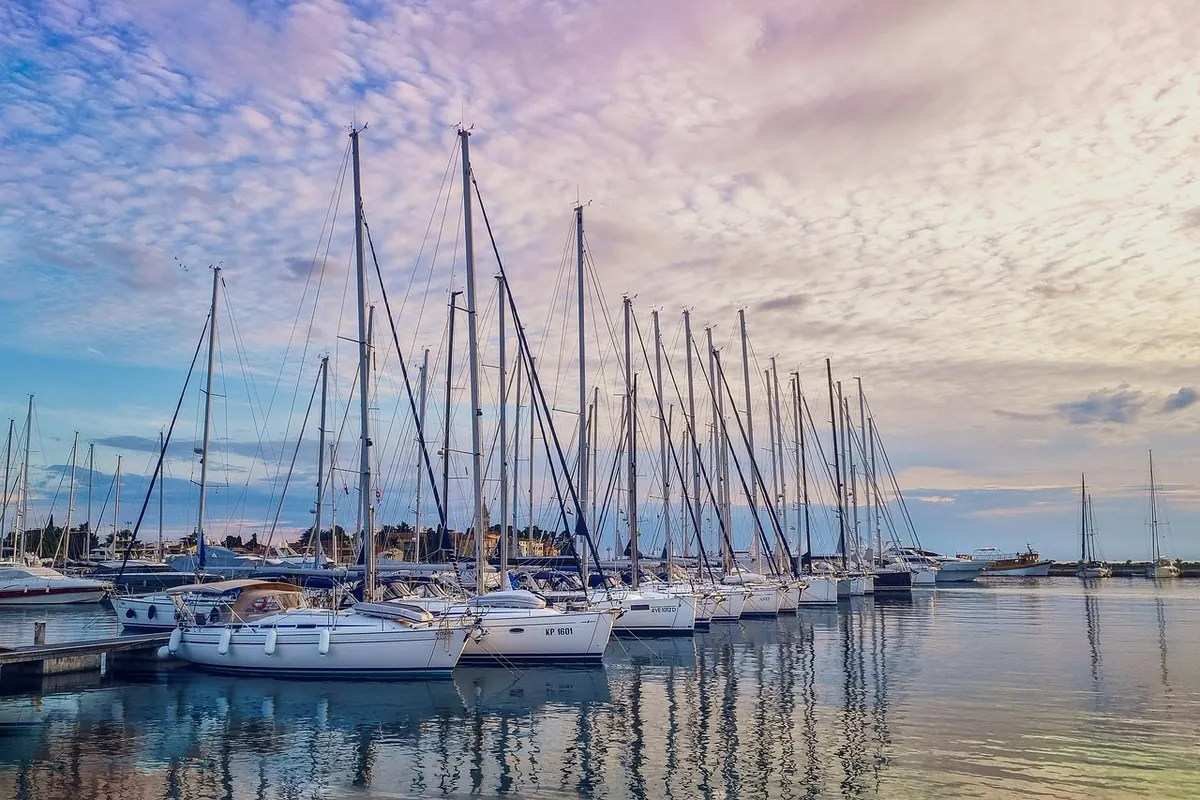
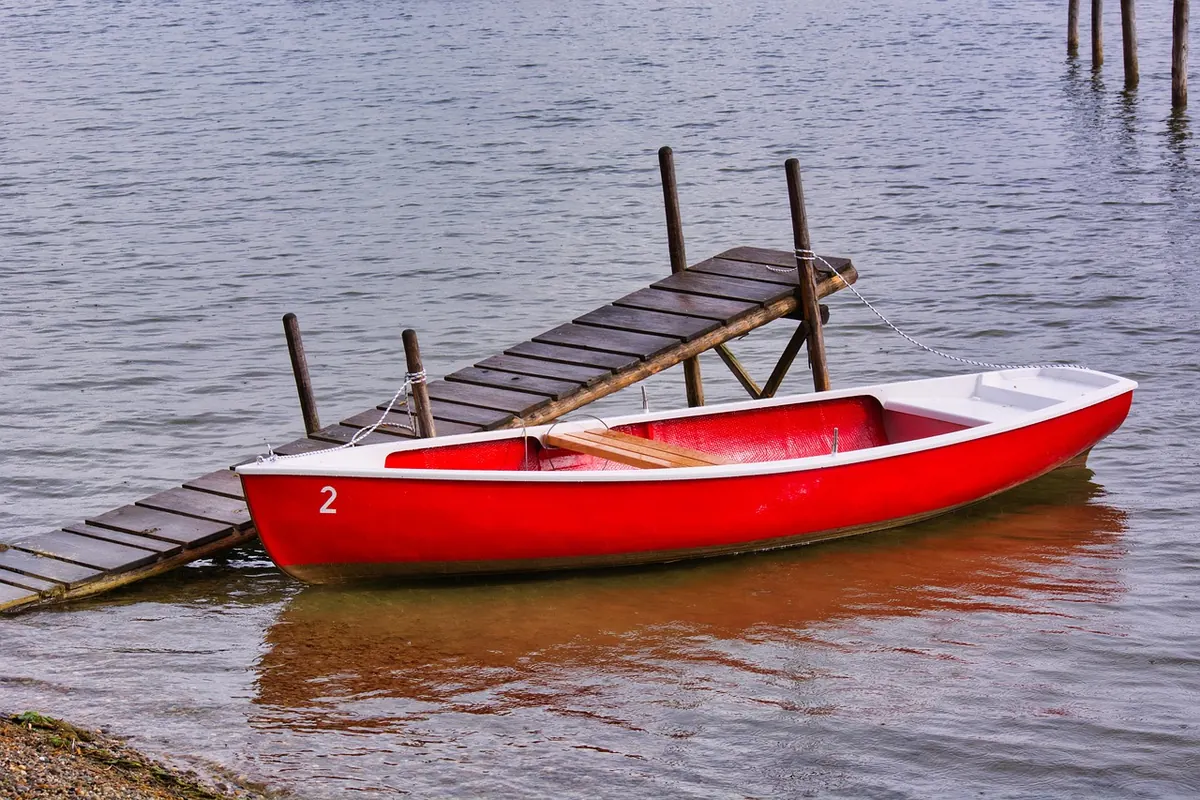
Saturday afternoon, the wind shifts and the whole marina starts talking. Halyards slap, a fender squeaks, and somewhere along the pontoon a dock line takes up the load with a low groan. That groan tells you what the line is made of. Nylon complains and then gives; polyester accepts the load and stays quiet; polypropylene squeaks across the cleat and goes chalky white before the season is out.
On the chandler's shelf the three look nearly identical — same diameter, similar colour, comparable price. What separates them is the fiber inside, and that fiber decides how your boat sits in a gust, how often you replace your lines, and whether tying up on a Tuesday evening is something you do without thinking about it.
Nylon: the spring in the system
Nylon, or polyamide, is the traditional mooring material and still the sensible default for most boats. It is the stretchiest of the three, so it works like a shock absorber. A gust, the wake of a ferry, or a neighbour's careless turn into the fairway gets swallowed by the line instead of being delivered straight into your cleats, fairleads and deck fittings.
That same elasticity becomes a drawback when nylon is used in the wrong place. A boat on long nylon lines will move — surging forward on the bow line, swinging back, hunting around the berth. In a sheltered harbour that is harmless. On a tight finger pontoon, two fenders from the boat next door, it is the reason you keep waking up at three in the morning to check.
Nylon takes up water. A wet line is heavier, a little stiffer, and slightly weaker than a dry one, though it recovers as it dries. Its resistance to sunlight is middling: it fuzzes, then feels thin and rough where the sun has been working on it.
Polyester: the quiet one
Polyester, sold as Dacron or Terylene depending on the shop, is the low-stretch option. Under the same load it stretches roughly a third as much as nylon does. That makes it the better material when you want the boat to stay exactly where you put it: spring lines, permanent mooring warps, anything where a steady position matters more than cushioning.
It also handles sun better than nylon and far better than polypropylene. Polyester lines keep their body, resist chafe well and barely absorb water at all. They sink rather than float, which is worth knowing if you ever drop one over the side in a hurry.
The trade-off is that polyester transmits shock. Your hardware takes the full snatch of a gust instead of having it softened on the way. If your berth is exposed, keep at least one nylon element in the set — a nylon spring line, or a proper snubber where the chain or the line meets the boat.
Polypropylene: cheap, light, temporary
Polypropylene is the budget material and behaves like one. It floats, it is the lightest of the three, and it comes in colours bright enough to find at the bottom of a locker. It is also the first to fail in the sun. Ultraviolet light breaks the fiber down, and the line turns brittle, chalky and noticeably weaker — often within a season or two of full exposure.
It is slippery, too, which means knots can creep loose under load. As a dinghy painter, a line to throw to someone on the quay, a temporary tie-up for the afternoon, a float line for a bucket or a swim ladder, it does a job cheaply and cheerfully. It is not the material for holding a boat through a winter gale, and it should not be left as a permanent mooring line.
Sun, salt, and chafe
The UV order
Best to worst: polyester, nylon, polypropylene. Marina life is hard on all three — reflected light bouncing off the water, salt crystals grinding inside the fibers, hot afternoons, and a cleat that never quite stops moving.
Where lines actually fail
Almost never in the middle. Lines fail where they pass through a chock, run over a toe rail, or sit against a cleat horn for six months. A few habits do more for line life than any upgrade in material:
- Rinse your lines with fresh water every few weeks and let them dry loosely coiled, out of direct sun.
- Inspect the section that runs through the chock or over the toe rail — that is where the wear shows first.
- Add chafe gear: a length of hose, a leather sleeve, or a purpose-made cover, lashed so it stays where the friction is.
- End-for-end your lines once a season so the wear is shared between the two ends.
- Retire any line with a hard, shiny, glazed patch, a frayed core, or a spot that feels thinner than the rest of the length.
Cost, weight, and handling
Polypropylene is the cheapest by a clear margin. Nylon and polyester sit closer together, with polyester usually costing a little more for the same diameter; three-strand is kinder to the wallet than double braid, whatever the fiber. If your budget is limited, spend it on the lines that hold the boat in bad weather and economise on the painter and the spare.
Weight and feel matter more than people expect. Polypropylene is light and easy to coil and throw. Wet nylon is heavy, and a long bow line can weigh on the hand. Polyester feels firm and doesn't go floppy when saturated, which is one reason sailors like it for anything they handle often.
Size, splices, and a rough starting point
As a rough starting point for a typical cruising boat, 10 mm covers boats up to roughly eight or nine metres, 12 mm suits nine to twelve metres, and 16 mm from there upward. Treat that as a first guess and check the figures for your own boat and mooring arrangement before you buy; too thin is a safety problem, and far too thick is stiff, heavy and awkward to handle.
Splice where you can, knot only when you must. A well-made eye splice keeps most of the line's strength; a knot can cut a substantial part of it away and is also the first place chafe begins. If you don't splice, learn — it is an evening's work with a bit of scrap line and a fid.
Choosing for your own boat
A mixed set usually beats a matched one. Two nylon bow and stern lines for give, two polyester spring lines so the boat stays square in the berth, a lighter polypropylene painter for the tender, and one spare line long enough to reach across the fairway if you ever need it. That is a workable kit for most coastal berths, and it costs less than replacing a set of everything in the most expensive material on the shelf.
Look after them, inspect them twice a year, and replace them before they look tired rather than after. The line is the cheapest part of the mooring and the one doing the most work. When the wind turns on a Saturday afternoon and everything in the marina starts talking, you want yours to be the quiet one.
Photo: Antranias / Pixabay